Paint correction is one of those terms that gets tossed around in car circles without much explanation. In practice, it is careful, measured polishing that levels a thin slice of clear coat to erase swirls, haze, and other defects. If you live in Kentwood and commute through winter brine, spring grit, and the occasional tunnel wash, you have almost certainly seen that spiderweb effect in the sun. The right correction can make a car look freshly painted. The wrong approach can chew through clear coat or set unrealistic expectations. The choice between a one-stage and a multi-stage correction sets the tone for the entire job.
I have put machines on everything from daily drivers to weekend toys and gelcoat on lake boats. The conversation usually starts with two questions: What defects are we chasing, and how is the car used? The answers decide whether a simple enhancement will do, or a deeper, multi-step correction makes sense.

What paint correction really does
At its core, correction refines the top layer of clear coat by cutting away microscopic peaks so that light stops scattering. Under sunlight or LEDs, those peaks show up as swirls, haze, or random isolated deep scratches. Most modern clear coats measure in the range of 40 to 60 microns thick, with total paint often between 100 and 150 microns including base coat and primer. Only a few microns are safely available to remove. Good work aims to correct the defect without over-thinning the panel.
Different paints behave differently. German clear can be on the harder side and resist quick correction. Some Japanese clears are soft and mar easily, which changes pad and polish choices. Repaints can vary wildly and may be thin at edges and body lines. Before any machine touches paint, I like to map a car with a paint thickness gauge, test a safe section, and assess the mix of defects. Rock chips, deep key marks, and body shop halos from prior repairs will not fully vanish without aggressive techniques like spot sanding, which is not always the right choice for a daily driver.
One-stage correction: what it is and where it shines
A one-stage, sometimes called an enhancement polish, uses a single pad and product combination to cut and finish in one pass. With modern diminishing abrasives and hybrid pads, you can remove a surprising amount of light marring and oxidation while finishing glossy and clear. On most daily drivers in Kentwood that see automatic washes through the winter, a one-stage will clean up the bulk of wash-induced haze and bring back depth.
Expectations matter. A strong one-stage typically improves the finish by 50 to 70 percent. Light swirls, slight haze, and mild water spotting respond well. Random deep scratches that catch a fingernail, heavy etching from bird droppings, and sanding marks need more. The upside is efficiency. One-stage work can often be completed in a single day when paired with thorough prep. That keeps disruption low for busy owners who still want their vehicle to pop.
Pads and polishes matter more than brand names. On soft clear, a finishing pad with a mild polish can still cut enough to make a night-and-day change. On harder clear, a medium pad and an all-in-one polish that has more bite might be needed, with careful arm speed and pressure to preserve clarity. Heat management is critical on thin edges and around plastic bumpers. One-stage is not an excuse to speed through. It simply means all the correction and refinement happen in one pass.
Multi-stage correction: deeper refinement, more decisions
Multi-stage correction stacks compound and polish passes to chase higher defect removal. The first stage uses a cutting compound with a more aggressive pad to remove heavier swirls and random scratches. The second stage refines the haze left by compounding. Some paints benefit from a third jeweling step with an ultra-fine polish to maximize clarity, especially on darker colors.
Done well, a multi-stage can push improvement into the 80 to 95 percent range when the paint allows it. That level of work takes time. Taping trim, cleaning foam pads, swapping to microfiber or wool as needed, and correcting complex shapes like mirror caps and door handles all add hours. On black or dark blue vehicles, the difference between a good two-stage and a great three-stage can be visible under unforgiving light, but only if the paint is stable and thick enough to handle it.
Risk management grows with each pass. Factory edges are thin. Refinished panels might carry solvent pop or trapped defects that telegraph under a hard cut. You need to know when to stop. It is not defeat to leave a deep scratch softened but present, rather than chase it into the primer. This is where experience with a variety of vehicles, lighting, and measurement tools pays off.
How Kentwood conditions shape the choice
Southeast of Grand Rapids, our roads see salt and calcium chloride from the first freeze to the first thaw. Spring adds grit and construction dust. Many residents rely on touch or tunnel washes from November to April because hoses freeze and garages are busy. Those brushes and drying curtains mark clear coat. Park under trees near the office or a ball field, and you will collect sap stains and bird strikes that etch if they sit.
On white or silver cars, a one-stage usually handles these patterns nicely and gives a big return for the effort. On black, dark gray, or navy, the same marks telegraph more. If you have a black SUV that has lived three winters of tunnel washes, a multi-stage on horizontal panels and a lighter touch on the sides can be a smart split approach. A thoughtful correction plan does not need to be all or nothing. I often recommend targeted multi-stage on hood, roof, and trunk, then a one-stage around the rest of the body to balance results and time.
How On the Spot Mobile Detailers gauges your paint
At On the Spot Mobile Detailers, the first conversation is not about products, it is about paint history and use. Factory finish or respray. Garage kept or parked outdoors. Automatic washes in January or hand washes all year. We map thickness across panels, mark any repainted sections, and do a test spot that shows, under auto detailing Kentwood light, what a one-stage will deliver and what extra a compound step adds. That moment often answers the one-stage versus multi-stage question better than any sales pitch.
The team brings the setup to your driveway, which helps if you are juggling work and family in Kentwood and cannot leave a car at a shop for days. Mobile detailing Kentwood is not just a convenience note, it shapes process. We manage power, lighting, and climate so that polish behaves consistently, especially when Michigan swings from humid afternoons to crisp evenings in a single week. That control keeps finishing passes crisp and avoids surprise haze the next day.
Case notes from On the Spot Mobile Detailers in Kentwood
A 2018 Camry in pearl white arrived with light marring and faint water spots from sprinklers. Daily driver, parked outdoors at an apartment complex, run through the wash twice a month. After decontamination and a test spot, we went with a one-stage using a light cutting foam pad and a fine polish. Under LED inspection, we achieved a visible 60 to 70 percent improvement in a single pass, and the owner was thrilled that it fit into a half-day slot. We then applied a sealant to buy time until the first freeze. This is a common scenario for car detailing Kentwood on commuter vehicles, where practicality rules and a clean, glossy look beats chasing every mark.
A very different case rolled in with a 2015 Corvette in black. The owner had tried a discount wash plan and had a heavy wash-scratch pattern plus a few isolated deeper marks on the quarters. After measuring 110 to 130 microns total thickness and confirming original paint, we corrected in two stages: microfiber cutting with a diminishing compound, then a slow finishing pass on a soft foam pad. We saved the deeper random scratches from aggressive sanding to avoid thinning. Post-correction, we applied a ceramic coating Kentwood owners often ask about, which helped lock in the clarity and hardened the surface for easier maintenance. Under sun, the car read sharp and wet, with almost all swirls gone and only the few deepest marks softened to near invisibility.
Where ceramic and other coatings fit in
Correction and protection work hand in hand. A one-stage without protection will still look great for a time, but salt and wash marring will return faster. A multi-stage that is not protected is like new carpet with no floor mats. For drivers who plan to keep a car for several seasons, a ceramic coating after either type of correction buys measurable durability. It will not make paint invincible, but it reduces abrasion during washing and resists staining. Think of it as adding a slick, sacrificial barrier on top of your hard-won clarity.
Owners sometimes ask about wheel coating Kentwood packages and interior coating Kentwood add-ons at the same appointment. It makes sense when you are already deep-cleaning and correcting a car. Coated wheels shed brake dust more easily, and coated leather and plastics clean faster, which helps if you cart kids to soccer at Coventry Woods or metal shavings home from a job site. If you split your time between the driveway and Reeds Lake, marine detailing Kentwood strategies for gelcoat oxidation also borrow from paint correction logic, although gelcoat behaves differently and often benefits from heavier cutting and different pad choices.
For homeowners interested in garage finishes and protection, residential coating Kentwood options for floors and storage do not overlap directly with paint correction, but keeping dust down and floors sealed reduces airborne grit that lands on a freshly corrected car. If you store a boat or trailer near the car, consider that during buffing. Gelcoat dust can cross-contaminate pads quickly.
A practical decision guide
If you are stuck between one-stage and multi-stage, ask five practical questions. Keep the answers honest to your situation and the car’s role.
- What percentage improvement do you actually want and need: a clean, glossy daily or near-show clarity? How thick and stable is the paint, including any repainted panels or thin edges? How you wash now, and how you will wash after, considering winter tunnel use versus hand washing? How dark is the color, and how much do defects telegraph on it under sun and LEDs? How much time can the vehicle be down, and does a hybrid plan make sense, like multi-stage on horizontal panels only?
A simple, accurate answer beats a complicated plan that does not fit your life. For many owners in Kentwood, a solid one-stage plus protection becomes the right compromise. For dark, well-loved weekend cars, multi-stage feels justified as long as there is a maintenance plan to keep it looking that way.
Prep, the unglamorous difference-maker
You cannot polish dirt. Proper prep is the foundation of any correction. Decontamination starts with a thorough wash that removes road film, then a chemical decon to dissolve iron deposits common from winter roads, followed by a clay pass if the surface still feels rough. Skipping this or rushing it loads pads with grit and drags micro-scratches across the clear coat. On the flipside, over-claying a soft clear can induce marring that forces a heavier cut than necessary. Moderation matters.
Tape off trim. Modern trim can stain or burn from polish residue, and while a magic eraser may fix some marks, textured plastics are unforgiving. Load work lights onto tripods and change angles. The sun will not be there to help you at 8 p.m. In January. Good lighting reveals haze and faint holograms that lurk after compounding. On the Spot Mobile Detailers keeps multiple lighting temperatures on hand to catch what one spectrum misses.
Common pitfalls and how to avoid them
Overuse of aggressive cutting pads is the fastest way to create more problems than you solve. If a medium foam pad and a modern compound can remove most defects while finishing nearly clear, take that win. Limit microfiber or wool to targeted spots, soften edges, and refine them. Chasing perfection on a thin trunk lip is a bad trade. If you see primer ghosting or suspect a respray without clear boundaries, measure and err conservative.
Dealership prep can create fresh marring right before delivery. If you are planning a correction on a new purchase, request that the film be left on and no wash be performed. I have seen brand-new black SUVs arrive covered in wash trails from a quick prep that took five minutes with a tired brush. A single-stage enhancement on a new car is often enough to level those and set the tone for future care, especially if you add a ceramic coat while the paint is still in excellent condition.
Headlights are their own topic, but they dovetail nicely with correction sessions. Headlight restoration Kentwood work often involves sanding and polishing the polycarbonate, then sealing or coating it. Pairing restoration with paint correction gives the front of the car a uniform pop. On very oxidized lenses, always reseal with a UV-stable product. A naked, freshly polished lens will haze again quickly.
Maintenance that preserves your investment
You do not need a cabinet of specialty items to keep corrected paint looking fresh. A short, consistent routine works best.
- Use a touchless or well-maintained hand wash during winter, followed by a soft towel or forced air for drying, no wipe-down dusters. Wash top down, wheels last, with clean mitts and buckets. Replace towels that feel rough or drop them into the laundry mid-wash. After spring thaw, decontaminate with a gentle iron remover and inspect under light. Do not clay unless you feel bonded grit. If coated, use pH-neutral soap and skip waxes that can interfere. If not coated, apply a spray sealant every 6 to 8 weeks. Address bird strikes, sap, and fresh bug splatter with a rinseless wash solution and a plush towel as soon as you can.
This routine applies whether you did a one-stage or a multi-stage. The difference is the headroom you have to correct again in the future. A carefully executed one-stage leaves more of your clear coat banked if you need a refresh next year. A multi-stage spends more of that bank up front, so you must be diligent with washing to stretch the interval before the next correction.
Where other vehicle types fit
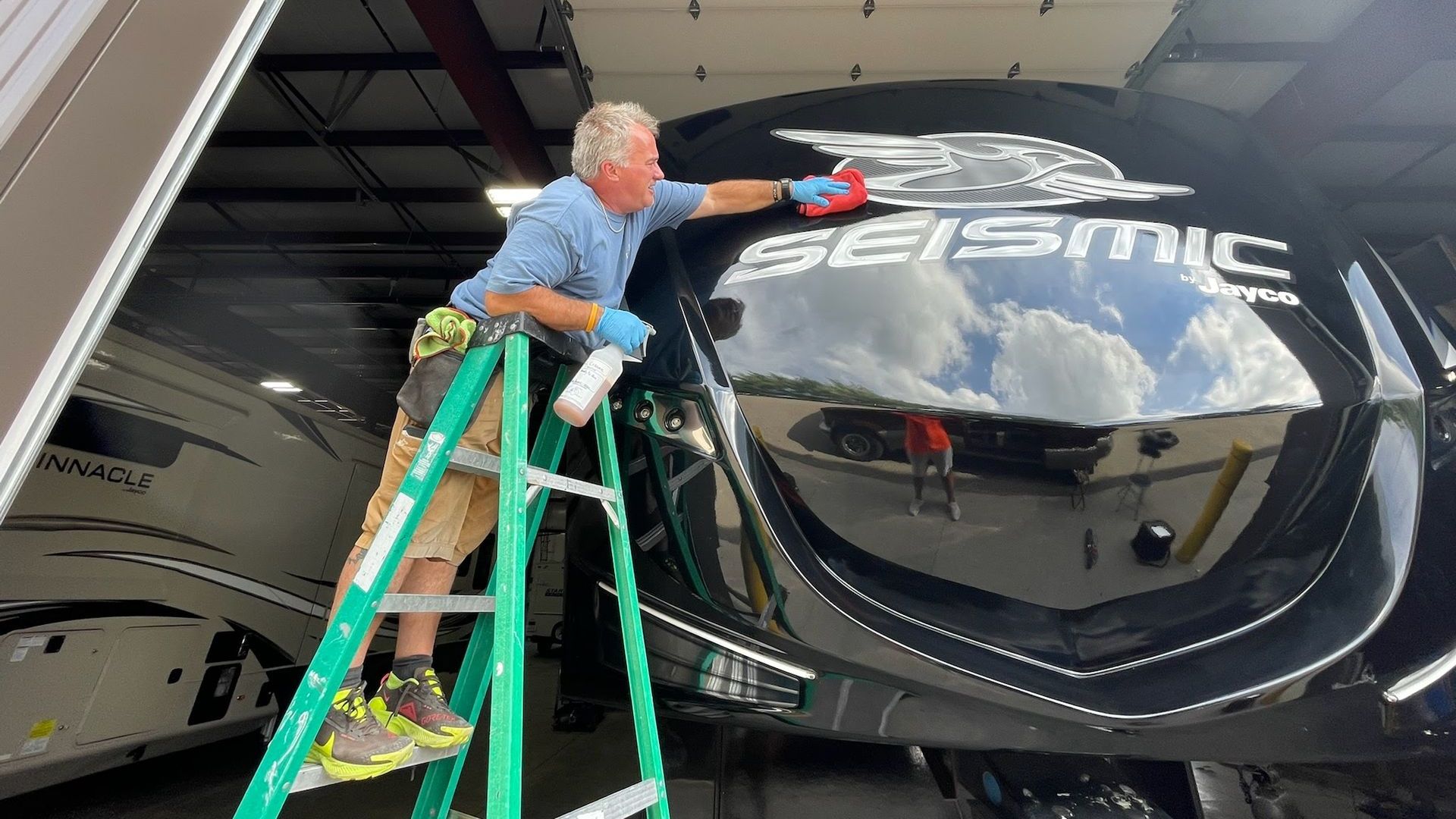
RV detailing Kentwood presents another twist. Gelcoat on RVs oxidizes faster than automotive clear and often needs a heavier initial cut. A one-stage on a lightly faded RV may get you back to a bright, glossy surface for a season. A multi-stage can be warranted on darker stripes and caps that chalk up more, but the size of the vehicle and the outdoors storage reality often drive a strategic, panel-by-panel approach. Boats stored near Reeds Lake bring similar decisions, but gelcoat responds to different pad and compound combinations, and protection timelines differ on the water.
If you split time between a truck and a family sedan, it is common to choose a one-stage for the workhorse and a more refined correction for the garage queen. Auto detailing Kentwood is not one-size-fits-all. It bends to how you use each vehicle and what brings you satisfaction when you stand back and look at it in the driveway.
When one-stage is not enough, and when multi-stage is too much
There is a line where a one-stage strains. If your black hood shows deep rotary trails from a past buff job, or if you have water spotting that has etched into the clear after a summer under sprinklers, a single pass will not level it cleanly. You can disguise some of it with oily polishes or glazes, but that is temporary. On the other hand, pushing a multi-stage on a soft, thin clear that already responds beautifully to a mild polish is not wise. You will gain little and spend valuable clear coat for marginal improvements.
I have talked owners out of chasing that last 5 percent when the car is a winter daily that will see brush washes until April. In those cases, the smarter play is a strong one-stage, a durable sealant or ceramic, then a spring decon and a quick enhancement polish to freshen it up. The story changes for a weekend car that you baby year-round, where a multi-stage, then ceramic, makes sense before a summer of cars and coffee.
How On the Spot Mobile Detailers builds a protection stack
Once correction is dialed, protection gets layered based on use. On the Spot Mobile Detailers will often suggest a ceramic coating on high-touch panels as a baseline, even if a client declines a full vehicle coat. Door cups, pillars, and the trunk lip take abuse. A partial approach can be a smart middle ground. For wheels, dedicated coatings that handle high heat keep brake dust from biting in. Interior coatings on leather and vinyl cut cleaning time, which is a quality-of-life upgrade if you are shuttling kids or pets.
For clients who prefer to test the waters, a yearly routine that blends a one-stage enhancement in late spring and a spray sealant every couple of months works well. If the goal is to stretch intervals between polishing, a full ceramic stack after a multi-stage will buy you seasons, not weeks, of easier maintenance. The team has refined this for the rhythms of car detailing Kentwood clients rely on, including those juggling multiple vehicles or storage constraints.
Final thoughts from the polishing cart
Choosing between a one-stage and a multi-stage correction is not a question of right or wrong, it is a question of fit. Fit to the paint, to the defects in front of you, and to the way the car lives. On light colors with routine wash marring, a one-stage paired with smart maintenance gives huge returns. On darker cars with etched defects or past rotary trails, a measured multi-stage transforms the look and sets the stage for long-term protection.
If you take one practical takeaway, make it this: test before you decide. A small, taped-off square on a representative panel under strong light tells the truth. That truth guides product choice, pad choice, and how far to go. In Kentwood, with our freeze-thaw reality and busy schedules, that clarity saves time and preserves paint. And when you do choose to correct, pair the work with protection and a simple wash plan. Your clear coat is a finite resource. Treat it like the investment it is, and it will reward you every time you pull into the sun.